

Hong Kong Stocks in a Value Trap? Why the Market Looks Cheap, Yet Still Needs a Catalyst
Keywords: Hong Kong stocks, Hang Seng Index, Hang Seng Tech Index, southbound flows, valuation, risk premium, sector rotation, AI, dividends, market outlook
Introduction
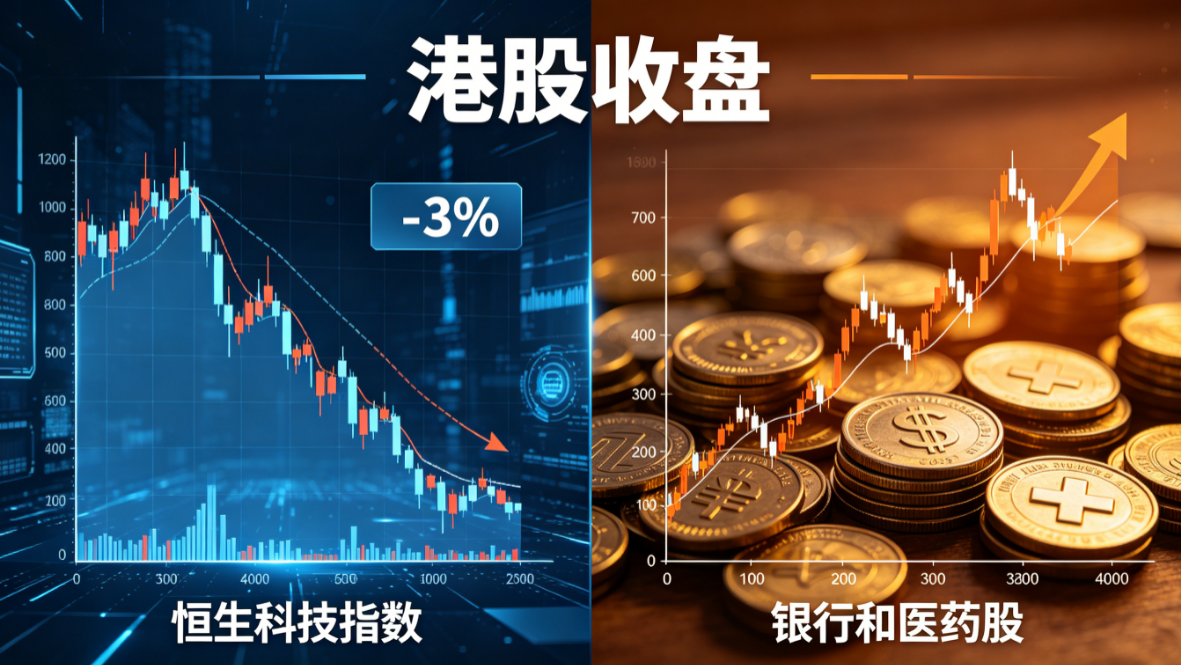
Hong Kong stocks have had a rough first half. Year to date, the Hang Seng Index is down 8.55%, the Hang Seng Tech Index has tumbled 19.56%, and the Hang Seng China Enterprises Index has fallen 12.51%. For investors hoping for a quick rebound, that is a disappointing scorecard.
But the story is more interesting than a simple “the market is weak” narrative. The real problem is a mismatch: Hong Kong’s index weights are still tilted toward banks, energy, and old-economy names, while global money is chasing technology and growth. In other words, the market structure and the market preference are speaking different languages.
And yet, beneath the surface, there are signs that something is changing. Earnings have started to turn, risk premium is sitting near historical lows, and southbound capital is still flowing in. Hong Kong may be a “cheap market,” but cheap does not always mean immediately attractive. It often means the market is waiting for a trigger.
The First-Half Story: Four Phases, Four Moods
This year’s Hong Kong market has gone through four distinct phases, and each one had its own logic.
1. The Spring Rally
From January 1 to January 29, the market enjoyed a classic early-year bounce. The Hang Seng Index rose 9.12%, while the Hang Seng Tech Index gained 5.89%. Policy support from the mainland helped boost sentiment, especially around equipment upgrades and consumer trade-in programs. At the same time, AI enthusiasm lifted valuation expectations across the tech chain.
This phase was mostly about multiple expansion, not earnings. In plain English: stocks went up because investors were willing to pay more for future stories, not because profits suddenly improved.
2. The Deep Correction
From January 30 to March 31, the mood reversed sharply. The Hang Seng Index dropped 11.37%, and the tech index sank 20.39%. Three pressures hit at once: tighter global liquidity expectations, rising geopolitical tension, and disappointing earnings from major tech names.
When a market is already fragile, even a small shift in interest-rate expectations can matter. Add weak earnings and a more cautious risk appetite, and the result is a hard reset.
3. The Recovery Window
From April 1 to May 7, Hong Kong staged a rebound. The Hang Seng Index climbed 7.42%, and the Hang Seng Tech Index gained 10.14%. Oil prices cooled, inflation fears eased, and investors briefly returned to risk assets. Policy support from mainland China also helped stabilize sentiment.
This was the kind of rally that reminds people why Hong Kong can still move fast when the macro backdrop improves, even temporarily.
4. The Recent Pullback
From May 8 to June 1, the market slipped again. The Hang Seng Index fell 4.61%, and the tech index dropped 3.05%. Geopolitical noise never fully disappeared, so the risk premium stayed elevated. Still, not everything was weak: semiconductor shares rebounded on domestic technology themes, and hardware-related names benefited from stronger AI-related demand.
So the message is clear: the index is choppy, but stock selection is alive and well.
Sector Split: A Market of Winners and Losers
If you only looked at the headline index, you would miss the real action. Sector performance has been extremely uneven.
As of June 1, only six of Hong Kong’s major sectors were up, while five were down. Energy led the way with a 22.18% gain, followed by industrials at 19.94%. Real estate, information technology, utilities, and financials also posted positive returns. On the losing side, healthcare, staples, materials, consumer discretionary, and communication services all fell.
Why Energy Is So Strong
Energy’s rally is not a mystery. It reflects a mix of supply and demand factors. Geopolitical tensions pushed oil and coal prices higher, domestic safety inspections tightened supply, and electricity demand remained solid. On top of that, AI computing demand is indirectly boosting power consumption, which has strengthened the case for electricity and coal-related assets.
Why Industrials Are Rising
Industrials are getting a lift from the AI buildout. The market’s favorite phrase this year may be “the end of computing is power.” Behind the slogan is a real investment cycle: power grids, cooling systems, industrial equipment, and related infrastructure are seeing stronger orders. This is not just a story about chips; it is a story about the whole backbone that keeps chips running.
Why Tech Looks Strong but Isn’t Easy
Information technology may be up on paper, but the earnings side is still messy. Semiconductor and hardware names can rally hard, yet much of that move comes from valuation re-rating rather than profit growth. AI spending is real, but many companies are still in the “invest first, monetize later” phase. That means revenue can grow while earnings lag behind.
Real Estate: A Deeply Beaten but Interesting Corner
Hong Kong-listed mainland developers have become a value play for some investors. The sector is cheap, expectations are low, and policy support is trying to stabilize confidence. While this does not solve the structural challenges in property, it does create room for sharp rebounds when sentiment improves.
Valuation: Cheap, but for a Reason
This is where the “cheap but not simple” part comes in.
As of June 1, the Hang Seng Index was trading at about 12.09 times earnings, which looks inexpensive compared with major global benchmarks. Its price-to-book ratio was also low. On a relative basis, Hong Kong is clearly in bargain territory.
The more revealing metric is risk premium. Against U.S. Treasury yields, Hong Kong’s equity risk premium sits at an extremely low historical percentile. That suggests the market is already pricing in a lot of caution. For overseas investors, Hong Kong is not just cheap—it is deeply discounted.
But there is a catch: cheapness alone is not a catalyst. The reasons Hong Kong looks cheap—geopolitical uncertainty, tighter liquidity expectations, and property weakness—are also the reasons the discount persists. A valuation gap can stay open for a long time if there is nothing to close it.
Fundamentals: The Earnings Turn Is Real
The good news is that the fundamentals are no longer deteriorating in a straight line.
Hong Kong’s listed companies are heavily tied to mainland China, so the broader Chinese economy matters a lot. The latest data show a mixed but not hopeless picture: high-tech manufacturing is growing well, exports in equipment and technology-related categories are solid, and new economy investment remains strong. At the same time, property and consumption are still soft, which keeps the overall recovery uneven.
Still, corporate earnings have started to improve. Revenue growth, net profit growth, and return on equity have all moved higher in recent periods. Importantly, the improvement is not just leverage-driven. Profit quality is better, which matters more than a short-term accounting bounce.
The split by sector is telling. Consumer, tech, and property-related names still face pressure, but healthcare and materials have seen strong profit recovery. Financials remain resilient. In other words, the broad market is not uniformly healthy, but the direction of change is becoming clearer.
Money Flows: Three Forces at Work
Hong Kong’s market liquidity is shaped by three main forces: southbound capital, foreign intermediaries, and U.S. monetary policy.
Southbound Flows
Southbound money remains the most important incremental source of demand. Although inflows are slower than in some previous periods, the trend is still positive. More importantly, southbound investors are no longer just buying high-beta growth names. They are increasingly favoring a mix of “hard tech” and high-dividend sectors such as banks, energy, semiconductors, and equipment.
That tells us something important: investors are becoming more selective and more defensive at the same time.
Foreign Investors
Foreign positioning is also shifting. Some capital has reduced exposure to internet and discretionary sectors while adding to industrials, financials, real estate, and energy. That is classic “follow the fundamentals” behavior. When both local and foreign capital move in the same direction, the signal becomes stronger.
The Fed Matters More Than People Admit
The biggest external variable is still the U.S. Federal Reserve. If oil prices continue to ease and inflation pressure cools, current hawkish expectations may prove too aggressive. A softer dollar and lower U.S. yields would be a direct tailwind for Hong Kong assets.
Outlook: From a Trap to a Runway
So what should investors expect in the second half?
The optimistic case is straightforward: if global liquidity improves, geopolitical risk calms down, and mainland earnings continue to recover, Hong Kong stocks could finally get the kind of valuation and earnings support that leads to a proper rerating.
The conservative case is more familiar: macro uncertainty stays elevated, the Fed stays tough for longer, and domestic demand recovery remains uneven. In that case, Hong Kong will likely remain a market of sectors rather than a market of broad index momentum.
Either way, the right strategy is not to bet on everything. It is to bet on quality.
Conclusion
Hong Kong stocks are in a strange but interesting place. The market is cheap, the mood is cautious, but the fundamentals are no longer as weak as the price action suggests. That is why the current setup feels like a “value trap” on the surface, yet also like a runway being cleared for a future move.
The key takeaway is simple: don’t wait for a broad-based bull market to tell you what to buy. Focus on the sectors where earnings are actually improving, where capital is already rotating, and where the valuation still leaves room for upside.
In Hong Kong, the next real move will likely come from a mix of better liquidity, better earnings, and better stock selection. Not a full-blown miracle—just a market that finally stops arguing with its own price.